
Scott County Court Records After Arrest
The arrest-to-court path in Scott County uses separate systems. The sheriff, local police, Virginia State Police, or another authorized agency may make the arrest. SWVRJA may book and hold the person at Duffield. Court records then live with Virginia courts and the Scott County clerk offices, not inside the jail roster. The jail roster may show arrest or booking charges, but those labels can change when the prosecutor files, amends, reduces, or drops charges.
The Scott County Commonwealth’s Attorney is the local prosecutor. Virginia uses the title Commonwealth’s Attorney rather than District Attorney, and the official page lists Kyle Kilgore at 202 West Jackson St STE 312, Gate City, VA 24251, phone 276-386-2576. For custody and booking detail, use Scott County jail inmate records. For booking photos, use Scott County jail mugshots. For court records after a jail arrest, search the court case systems and clerk records.
Find Scott County Court Records After Arrest
Start with the Virginia court portal that matches the likely court level. Many criminal and traffic matters begin in General District Court. Felonies, appeals, indictments, and transferred matters may appear in Circuit Court or OCIS 2.0. The Scott County Circuit Court Clerk page also links to online case information and gives local court schedule details.
- Use the arrest or booking name from the SWVRJA roster or sheriff weekly report.
- Search General District Court Online Case Information by locality and defendant name.
- Search Circuit Court Case Information for felony, appeal, indictment, or transferred matters.
- Use Virginia OCIS 2.0 for statewide criminal and traffic search where available.
- Compare each charge, case number, hearing date, and disposition to the jail booking record.
The Virginia Case Status and Information portal is the state starting point for court record systems.
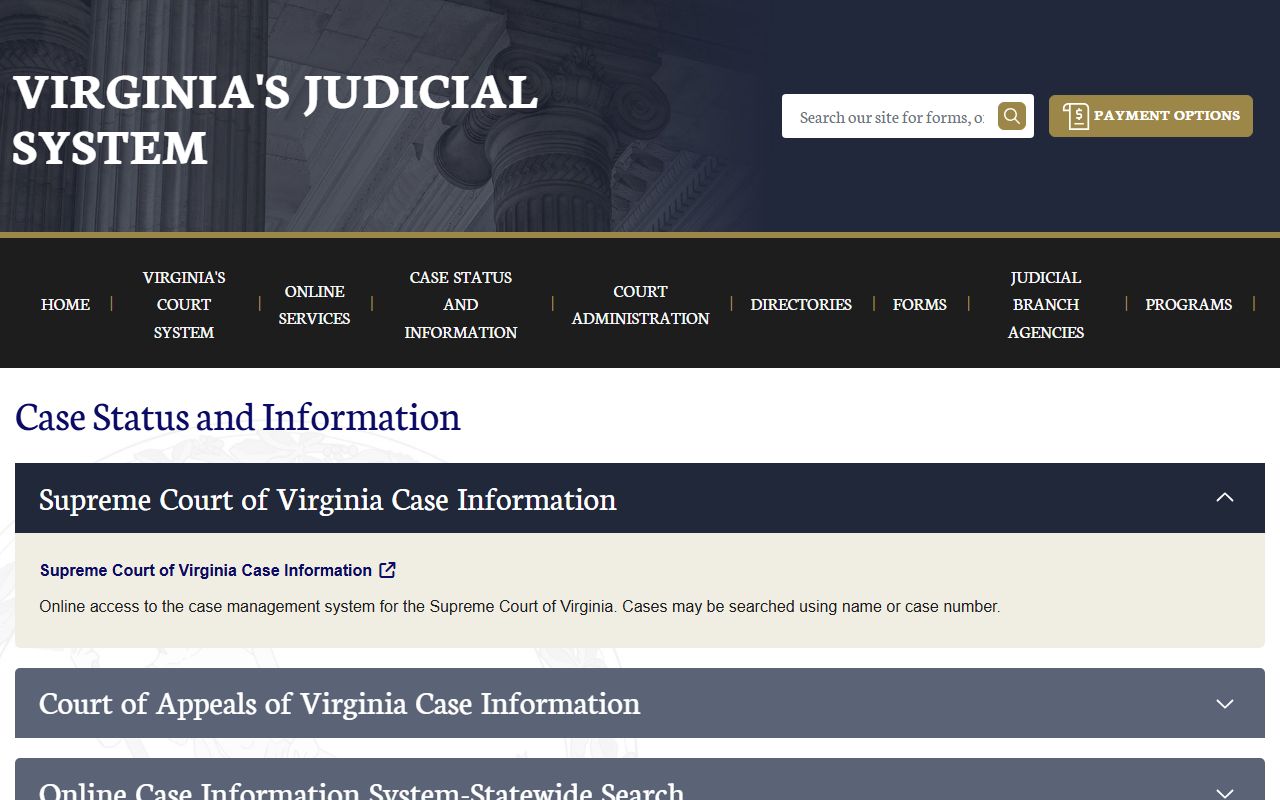
That portal helps separate court records after a jail arrest from the jail roster that only describes custody and booking data.
Scott County Court Search Portals
Search fields vary by court system, but the research confirms several official paths. Use the court type, locality, name, case number, or hearing date when available. If an older file or certified copy is needed, contact the clerk rather than relying only on the online index.
| Portal | Search Fields / Controls | Use |
|---|---|---|
| Virginia Case Status and Information | Menu for circuit, general district, and juvenile/domestic relations systems | State entry point. |
| General District Court | Locality, name, case number, hearing date, case type controls | Many first-stage criminal and traffic records. |
| Circuit Court Case Information | Locality, name, case number, hearing date | Felonies, appeals, and circuit matters where available. |
| OCIS 2.0 | Statewide criminal/traffic search | General district and select circuit court records. |
Charges After a Scott County Arrest
After a jail arrest, formal court records depend on the charging path. A complaint, information, indictment, warrant, or other charging paper can move the case into court. Jail charges may be broad intake labels. Prosecutors and courts control whether charges remain the same, are amended, reduced, dismissed, or presented to a grand jury.
| Document | Who Uses It | Practical Meaning |
|---|---|---|
| Complaint or warrant paperwork | Officer, magistrate, or prosecutor path | Often connected to the first stage of criminal/traffic matters. |
| Information | Prosecutor | A formal charging document used in some felony or negotiated paths. |
| Indictment | Grand jury | A formal felony accusation that can move the case in Circuit Court. |
The Scott County Circuit Court Clerk page says court terms begin the first Monday in February, May, August, and November, with grand juries on the first day of term. That timing can matter when a felony arrest does not immediately show a final circuit disposition.
Scott County Charge Status Terms
Charge status terms tell what has happened in the court record after an arrest. They should be read with the case number, court, hearing date, and disposition. A court status can be more current than the jail roster, especially after a release, transfer, plea, dismissal, or indictment.
| Status | What It Means |
|---|---|
| Pending | The case is unresolved and still moving through court. |
| Amended | The charge wording, level, or code has changed. |
| Reduced | The case moved to a lesser charge or lower level. |
| Dismissed | The court or prosecutor ended that charge. |
| Nolle prosequi | The prosecutor declined to continue the charge. |
| Conviction | A guilty finding or plea, not the same as an arrest. |
Bond After a Scott County Arrest
Bond can appear in jail paperwork, magistrate decisions, and later court records. Virginia release conditions may include personal recognizance, unsecured bond, secured or cash bond, surety bond, property bond, or no-bond custody. SWVRJA can only release a person when all court conditions and holds are satisfied. Commissary vendors such as JailATM are for inmate funds, not release bonds.
| Bond Type | How It Works |
|---|---|
| Personal recognizance / unsecured | Release by promise and conditions, with no full cash deposit up front unless conditions are violated. |
| Secured / cash | Money or security must be posted before release. |
| Surety | A licensed Virginia bondsman posts bond for a fee or collateral. |
| No-bond hold | The person remains in custody until a court or agency changes the status. |
Warrants and Scott County Arrest Records
No official online Scott County active-warrant search was located in the public pages reviewed. The sheriff’s office has contact information, a tip page, alert app, and weekly arrest/commit reports, but no confirmed searchable warrant database. Warrant-related questions can route through the sheriff non-emergency line, court searches, the Magistrate’s Office at 276-431-0146, and the Circuit Court Clerk criminal division at 276-386-3801.
Common warrant terms include arrest warrant, bench warrant or capias, search warrant, fugitive warrant, probation or parole violation warrant, and detainer. When a warrant is served, the person may move through magistrate or court action and then into SWVRJA custody if detention is ordered.
Charges vs Convictions
Public court records after a jail arrest may list charges long before a case is resolved. A charge is an allegation. A conviction is a final guilt finding or plea entered in court. This difference matters for employment, housing, licensing, and background checks, even though this site is not a consumer reporting agency and cannot be used for FCRA-covered decisions.
| Charge | Conviction | |
|---|---|---|
| Meaning | An accusation filed or tracked in court | A guilty plea or court finding |
| May change? | Yes, it can be amended, reduced, or dismissed | Changes only through court action, appeal, or later legal relief |
| Where verified | Court case docket and clerk records | Final disposition in court records |
Sealed and Expunged Arrest Records
Virginia expungement is governed by Virginia Code § 19.2-392.2. Expungement is a court process. It can affect public access to eligible arrest or criminal records, often after dismissal or other qualifying outcomes. It does not automatically erase copies that third parties may have already scraped, and it does not mean every record is eligible.
| Sealed | Expunged | |
|---|---|---|
| Public access | Hidden or restricted from ordinary public view | Removed from public access under the court process |
| Agency effect | Depends on the order and record type | Official records follow the statute and court order |
| Scott County path | Use the court and clerk process | Use the court and clerk process under Virginia law |
Restricted Court Records After Arrest
Not every record is public online. Juvenile and domestic relations case information is not public online in the same way as adult criminal portals. Investigative law-enforcement files may have limits under Virginia Code § 2.2-3706. Court records are handled through court rules and clerk access, not only executive-branch FOIA. For copies, certified records, or older files, contact the appropriate court clerk.
Important: Verify charge status with the court that holds the case before relying on a jail roster entry.
Public Record Search
Sponsored Results